Ctrl+K

mvtsa

  • Installation
  • Example gallery
  • API reference
  • Method lineage
  • The book
    • Citing
    • Changelog
    • All textbooks
  • GitHub
  • Installation
  • Example gallery
  • API reference
  • Method lineage
  • The book
  • Citing
  • Changelog
  • All textbooks
  • GitHub

Section Navigation

  • First steps: series, segmentations, representations, PCA models
    • First steps: segment, look, evaluate
    • Representations: PAA, PLA, SAX, episodes
    • PCA models: T², Q and similarity factors
  • Cost-based segmentation: costs, search strategies, number of segments
    • Costs and search strategies
    • The merge hierarchy: segmentogram and persistence
    • How many segments?
  • Latent-variable segmentation: PCA, dynamic PCA, recursive PCA, fuzzy and Fisher segmentation
    • PCA segmentation with the T² and Q statistics
    • Dynamic PCA segmentation
    • On-line segmentation with recursive PCA
    • Fuzzy segmentation with the modified Gath–Geva algorithm
    • Informative segments for parameter estimation (MMA polymerization)
    • Operating ranges of an energy indicator
  • Probabilistic, profile-based and state-based segmentation
    • Bayesian on-line change point detection
    • Recurring operating states
    • Shape changes: ClaSP and FLUSS
    • Predictive homogeneity with any scikit-learn model
    • Consensus of segmentations
    • Segmentation of a data stream
  • Elastic similarity: DTW and its relatives
    • Dynamic time warping and global constraints
    • A family of elastic measures on Cylinder–Bell–Funnel
    • Soft-DTW: a differentiable alignment and its uncertainty
    • Diagnosing and tuning warping
  • Correlation-based and segment-level warping
    • Correlation-based dynamic time warping
    • When the information is in the correlation structure
    • Process-dynamics-aware warping: DPCA-CBDTW
    • Real data: Japanese vowels and Riemannian local distances
    • Piecewise linear warping: MPLA, SPLA and MDPLA
    • A multivariate mixed segment distance
    • Comparing qualitative trends: episode alignment
  • Clustering time series, segments and trajectories
    • Partitional clustering: k-means, k-Shape, k-medoids
    • Hierarchical clustering and distance maps
    • Clustering multivariate recordings: BasicMotions
    • Clustering segments: recurring patterns across series
    • Objects that move together: trajectory clustering
  • Evaluation, validation and benchmarking
    • Measuring segmentation quality
    • Is the segmentation stable?
    • Benchmarking segmenters with statistical tests
    • Tuning segmenter parameters
  • Visualization and interpretation
    • A one-page segmentation report
    • Six-sigma visibility graphs
    • Series as images and networks
    • Looking inside alignments and collections
  • Reproducible analyses and model operations
    • From analysis to a deployable model
    • Monitoring a deployed model for drift
    • Experiment tracking and model cards
  • Case studies
    • Grade transitions of a polymerization reactor
    • Operating regions of a pH neutralization process
    • Explaining operating regimes
  • Example gallery
  • Evaluation, validation and benchmarking

Evaluation, validation and benchmarking#

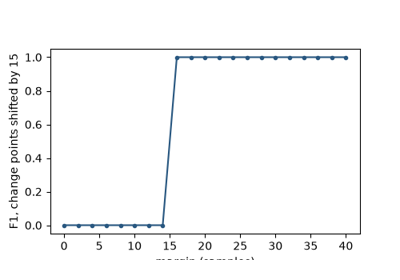
Measuring segmentation quality

Measuring segmentation quality

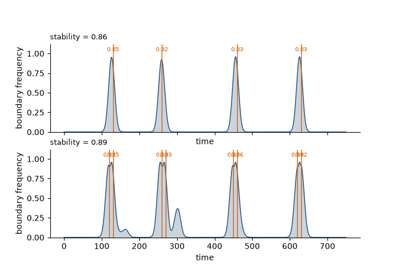
Is the segmentation stable?

Is the segmentation stable?

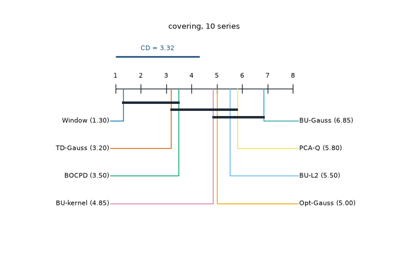
Benchmarking segmenters with statistical tests

Benchmarking segmenters with statistical tests

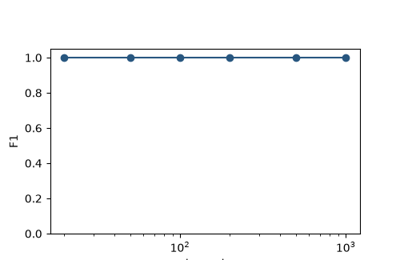
Tuning segmenter parameters

Tuning segmenter parameters

previous

Objects that move together: trajectory clustering

next

Measuring segmentation quality

Show Source

© Copyright 2026, János Abonyi.

Created using Sphinx 9.1.1.