hatvis.datasets.load_wire_harness#
- hatvis.datasets.load_wire_harness()[source]#
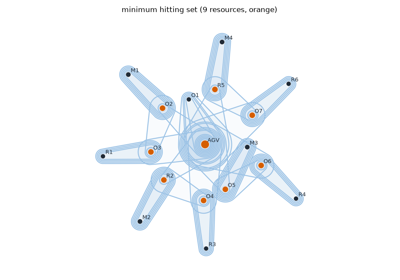
Intelligent collaborative manufacturing space of a wire harness assembly benchmark.
Reconstruction of the benchmark of Nagy et al. (2022): two parallel production lines (Kanban, buffers, four crimping and four assembly stations) with seven operators, six robots, an AGV, four crimping machines, two shared tools, three screwdrivers, five competences and three sensors (camera, RTLS fixture location, machine log). The 70 activities (hyperedges
a1–a70) follow the published activity sequence and types (Tables A.10–A.11); their resource sets were derived from the published process description (who loads, transports, crimps, assembles, hands over; which competence, tool and sensor is involved). The original incidence matrix is confidential, so numerical results of the paper are not expected to be reproduced exactly.node_data["type"]: operator, robot, AGV, machine, tool, screwdriver, competence, sensor.edge_data:type(activity type code),description,step(process step) andline(1 or 2).
Examples using hatvis.datasets.load_wire_harness#
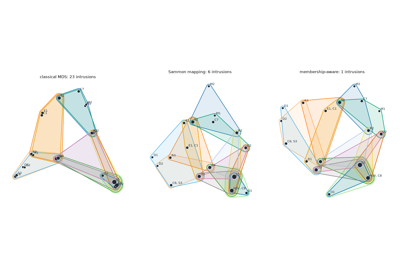
Membership-aware layout: similarity with fewer intrusions
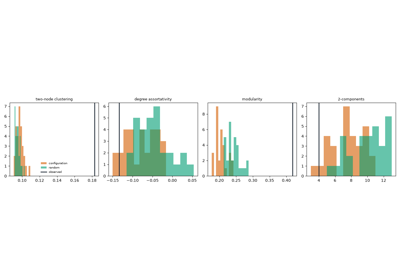
Null models: what is structure and what is chance?